GE Dishwasher Not Drying? 6 Fixes From GE’s Guidance
Updated October 30, 2026. Sources are linked in each section.
| What you see | Start with |
|---|---|
| Glasses spotty and everything damp | Rinse aid |
| Whole load wet, dishes cool | Heated Dry and hot water |
| Only plastics or dimpled pans wet | Loading. This is often normal. |
| Dishes wet, with water dripping from the top rack onto the bottom | Unload the bottom rack first; see door open |
| Everything above done and dishes still wet and cool | Service |
In this guide
How a GE dishwasher dries
GE describes drying in terms of heat. Its option guide says you can select Heated Dry “On for fast drying or Off to allow the dishes to dry naturally and save energy,” and that Added Heat makes the cycle “run longer with heating elements on to improve both wash and dry performance.” On models that have it, Dry Boost is “a drying option that targets hard-to-dry items like plastic,” which GE says gives “up to three times better drying compared to the Heated Dry option.” So a wet load is often a settings result, not a fault. Source: GE Appliances: dishwasher option definitions.
- Rinse aid dispenser on the door: keep it filled. GE says rinse aid helps drying.
- Heating element in the bottom of the tub: Heated Dry and Added Heat use it.
- Plastics and cupped items hold water. Angle them and put plastics on the top rack.
- Vent or fan on some models lets moist air out during drying.
- Open the door a few inches when the cycle ends so the steam escapes.
1. Fill the rinse aid dispenser
GE says to check the rinse aid dispenser and fill it if it’s empty, because rinse aid prevents spots on glasses and helps drying.
- Find the rinse aid cap on the inside of the door, beside the detergent cup.
- Open it and fill it to the level shown in your manual. Wipe up any spills.
- If your model has an adjustable rinse aid setting and loads stay wet with the dispenser full, raise it one step. Your manual shows how.
If you use detergent pods with built-in rinse agent and still get wet loads, fill the dispenser as well.
2. Turn on Heated Dry (or Power Dry)
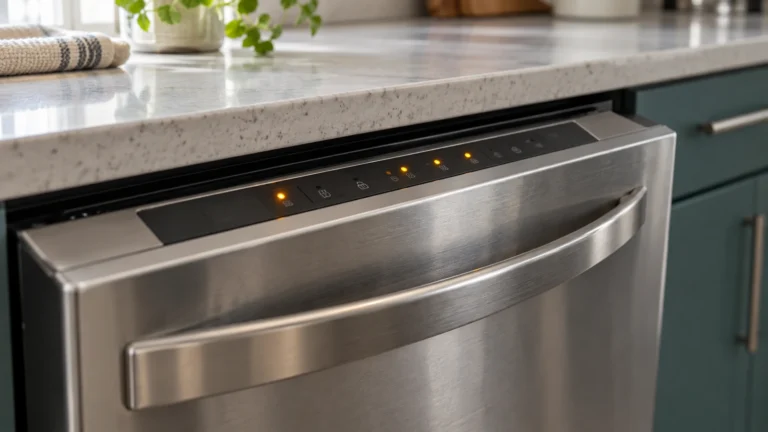
GE: “Use the ‘Heated Dry’ feature. This feature adds heat to promote drying.” GE notes that Power Dry replaces the Heated Dry button on models with that option. Some newer GE models also have a separate, stronger drying option called Dry Boost; use it if your model has it.
- Before pressing Start, press Heated Dry (or Power Dry, or Dry Boost where fitted) and check its light is on.
- Avoid energy-saving or air-dry settings when you need dry dishes. They skip the heated drying.
- Use a full cycle. Short or express cycles leave more water behind.
3. Make sure the water is hot enough
GE: “Water entering the dishwasher should be between 120 and 140 degrees Fahrenheit for best wash and dry performance. Run the faucet closest to the dishwasher prior to starting.” Dishes that finish hotter dry faster. If your water heater is set low, the dishwasher starts from cooler water.
4. Add heat with the wash options
GE suggests using one of the cycles designed for heavy soil, and heat options where your model has them: Added Heat, Wash Heat Boost or High Temperature Rinse. These raise the load’s temperature at the end of the wash, which helps it dry.
5. Load for drying
- GE: “Make sure that dishes are not touching” and “do not overload dishes in the dishwasher.”
- Angle cups and bowls so water runs off rather than pooling on the base.
- GE notes that cookware with dimples, indents or etching lets water pool, so those dishes may stay wet.
- Plastics hold little heat and often come out damp even on a working machine. Put them on the top rack.
6. Open the door a few inches after the cycle
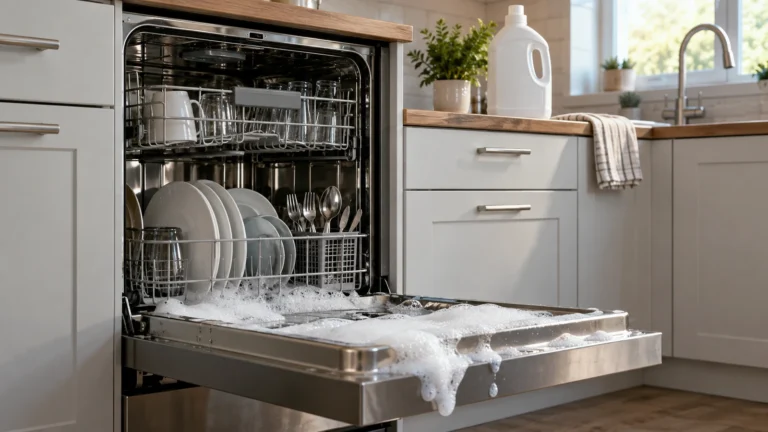
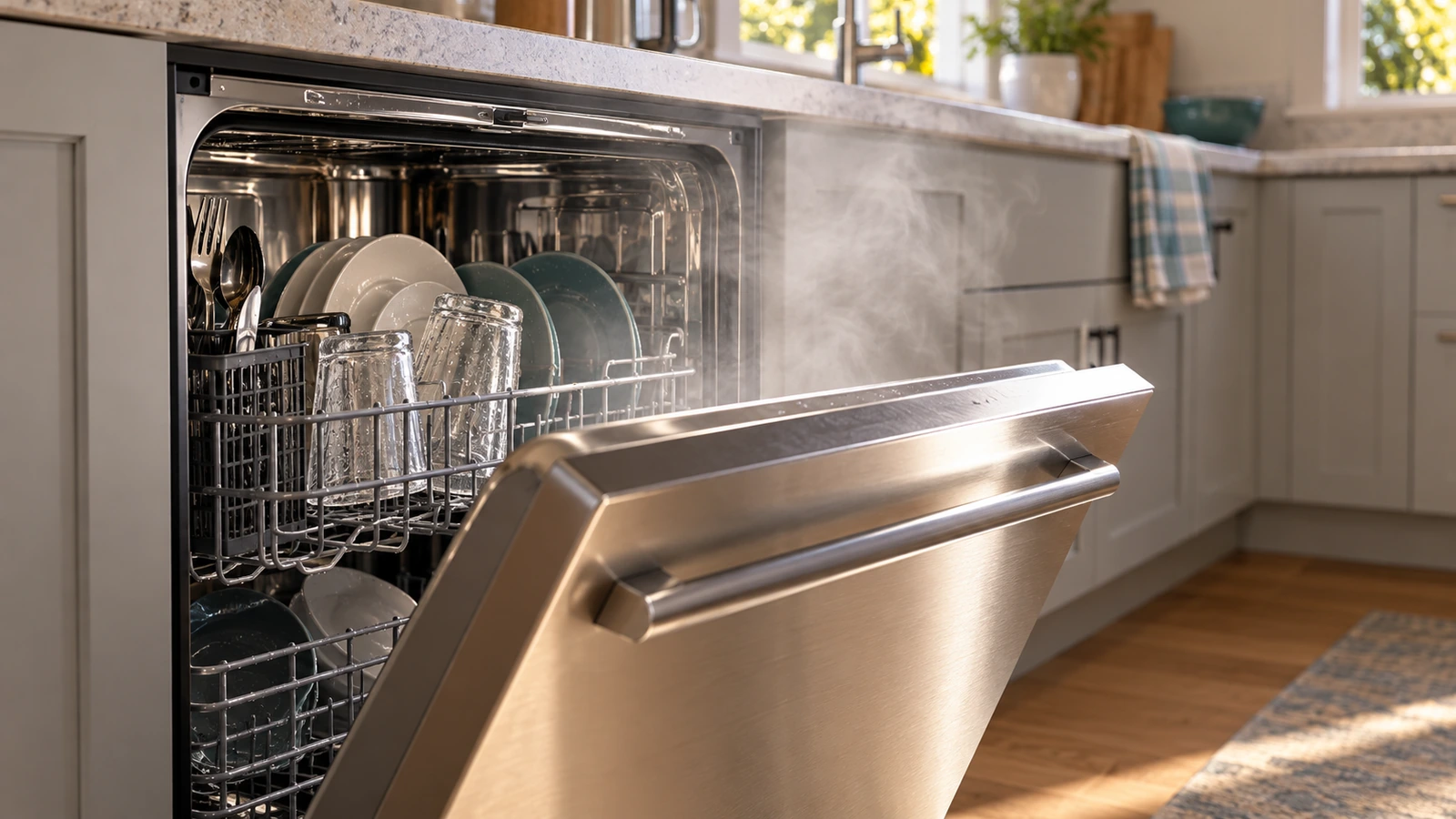
GE: “Open the dishwasher door several inches immediately after the dishwasher turns off. This allows the warm, moist air to escape.” Then unload the bottom rack first, so water from cup bottoms on the top rack doesn’t drip onto dry plates.
What a drying repair usually costs
| Repair | Typical cost | Source |
|---|---|---|
| Heating element replacement | $150 to $300 | Fixr (Jan 2025) |
| Diagnostic fee | $50 to $75 | Fixr (Jan 2025) |
| Service call fee | $35 to $100, often credited toward the repair | Fixr (Jan 2025) |
National ranges from Fixr, updated January 31, 2025. Rinse aid, settings and loading cost nothing to fix, so try steps 1 to 6 first.
When to call GE service
If dishes are still wet and cool after a full cycle with Heated Dry on, rinse aid full and hot water at the tap, the fault is likely in the heating or drying system. A technician can diagnose it; the design differs between GE models. Don’t touch the heating element or remove panels to test wiring. Book through GE Appliances dishwasher support with the model and serial number (usually on a label along the tub opening, inside the door), and note what you’ve tried.
Source: GE Appliances: dishwasher poor drying.
Frequently asked questions
Why are my plastic dishes always wet after Heated Dry?
Plastic doesn’t store heat the way glass and ceramic do, so water doesn’t evaporate off it. It’s normal, not a fault. Rinse aid and top-rack placement help.
What does Dry Boost do?
GE calls it “a drying option that targets hard-to-dry items like plastic” and says it gives “up to three times better drying compared to the Heated Dry option.” Only some models have it; check your control panel.
Does opening the door right away really help?
Yes. GE recommends opening the door several inches immediately after the dishwasher turns off, so warm, moist air escapes instead of condensing back onto the dishes.
Why is my dishwasher still wet after drying?
Usually Heated Dry was off, the rinse aid ran out, the water started cool, or the door stayed shut so steam settled back on the dishes. Plastics stay damp even on a working machine.
Why is water standing in the bottom of my GE dishwasher?
That’s a drain problem, not a drying one. See GE dishwasher not draining.
How much does it cost to fix a dishwasher that doesn’t dry?
If a part has failed, Fixr lists $150 to $300 to replace a dishwasher heating element, plus a $50 to $75 diagnostic fee. Settings and rinse aid fix most wet loads for free.
Other brands: Frigidaire not drying · LG not drying · GE not draining
Written and edited by Jordan Hale. Steps checked against GE Appliances’ poor-drying article and option guide; no hands-on test is claimed. Option names vary by model.