Frigidaire Dishwasher Not Drying? Heat Dry, Rinse Aid & More

Updated October 30, 2026. Sources are linked in each section.
In this guide
Start with which items stay wet
| What stays wet | Most likely reason |
|---|---|
| Plastic containers, wooden spoons, non-stick pans | Normal. These materials don’t hold enough heat to dry. See loading. |
| Water pooled in cup bottoms and bowl bases | Loading angle. See loading. |
| Everything is wet after a quick or 30-minute wash | Cycle choice. See Heat Dry. |
| Spotty glasses and generally wet load | Rinse aid |
| Whole load wet and the dishes feel cool at the end | Heat Dry setting and water temperature |
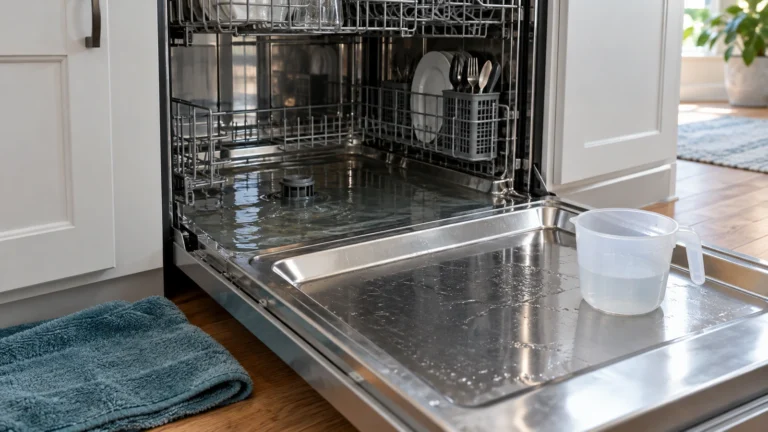
| Standing water in the bottom of the tub | A drainage problem, not a drying one. See below. |
- Rinse aid dispenser on the door: fill it. Frigidaire says it helps water sheet off.
- Heating element in the bottom: Heat Dry uses it. Air Dry relies on air instead.
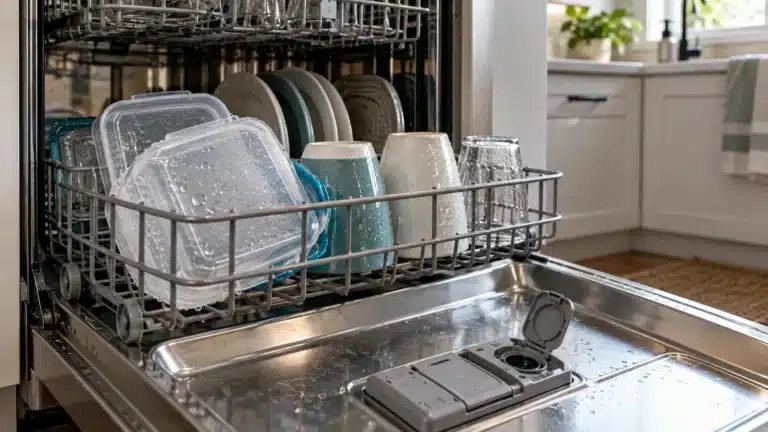
- Plastics and concave items: angle bowls; plastics may not dry completely.
- Vent or fan on some models: drying systems vary by model.
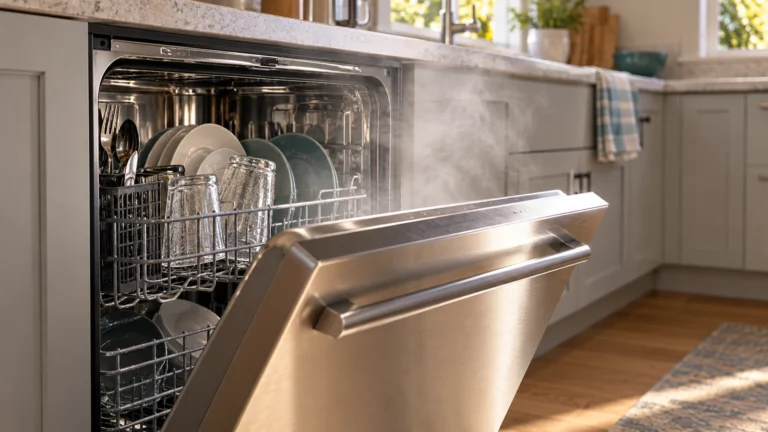
- Steam escapes when the door opens. Unload the bottom rack first.
1. Use Heat Dry, not Air Dry or a quick cycle
Frigidaire: “Quick Wash / 30 Minute wash cycles may not dry dishes completely,” and “the Air Dry option relies on air rather than heat, and may sometimes leave some dishes not completely dry.”
- Choose a full-length cycle such as Normal or Heavy.
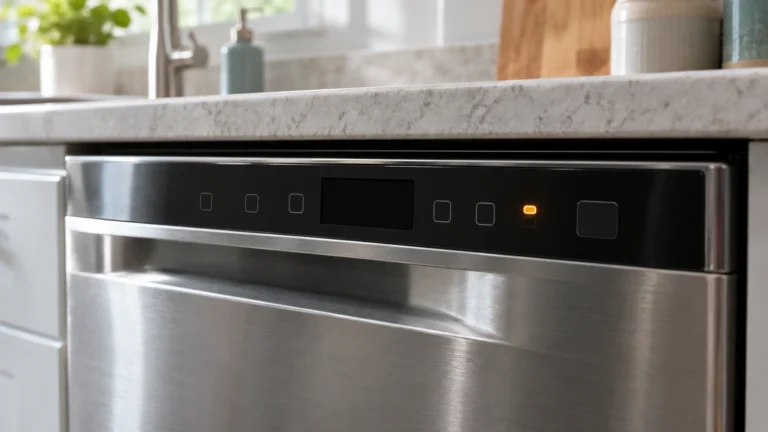
- Select the Heat Dry option so its light is on. On models that have it, the Sahara Dry cycle or option gives the strongest drying.
- Your model may remember the last options you used. If someone switched to Air Dry to save energy, it will stay that way until changed.
2. Fill the rinse aid
Frigidaire says rinse aid helps water sheet off the dishes and improves drying. The dispenser is on the inside of the door, next to the detergent cup.
- Open the rinse aid cap and fill it to the level mark shown in your manual. Wipe up any spills; spilled rinse aid can cause foam.
- Close the cap until it latches.
- Many models have an adjustable rinse aid dose. If loads stay wet or spotty with the dispenser full, raise the setting by one step and check again after a few loads. Your manual shows where the adjustment is.
Detergent pods with built-in rinse agent don’t always replace a filled dispenser. If you use pods and loads are wet, fill the dispenser too.
3. Check your water heater temperature
Frigidaire recommends setting the water heater to a minimum of 120°F. Cooler water means dishes finish cooler and hold less heat to dry off. Before starting the dishwasher, run the hot tap at the kitchen sink until the water is hot. That way the first fill isn’t cold water that was sitting in the pipes.
4. Load so water can run off
- Frigidaire: “Place concave items such as bowls at an angle to improve drying performance.” The same goes for mugs, cups and containers with recessed bases.
- Don’t nest items. Leave space so hot, moist air can move between them.
- Put plastics on the top rack. Frigidaire notes that plastics, wooden and concave items “may not dry completely.” That’s normal, not a fault.
5. Unload in the right order
Unload the bottom rack first. If you pull out the top rack first, water on the cups and bowls drips onto the dishes below. Let the load sit for a few minutes after the cycle ends; drying continues as the dishes cool.
6. Water in the bottom? That’s a drain problem
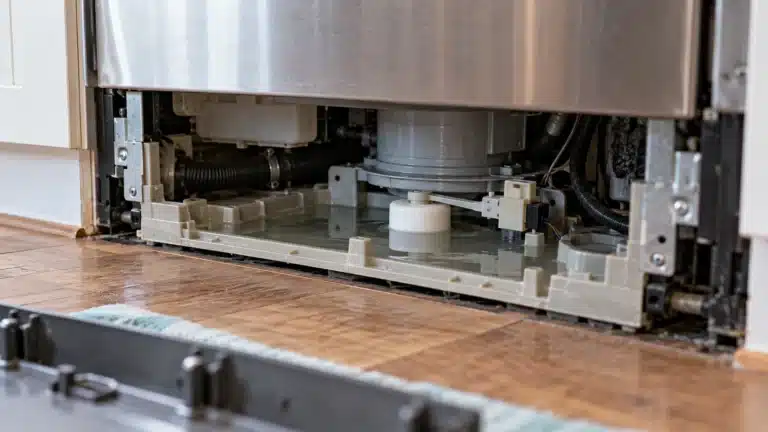
If water stays in the tub itself, drying will never be good. Frigidaire’s article also lists drain hose displacement as a cause. See Frigidaire dishwasher not draining and fix that first.
What a drying repair usually costs
| Repair | Typical cost | Source |
|---|---|---|
| Heating element replacement | $150 to $300 | Fixr (Jan 2025) |
| Diagnostic fee | $50 to $75 | Fixr (Jan 2025) |
| Service call fee | $35 to $100, often credited toward the repair | Fixr (Jan 2025) |
National ranges from Fixr, updated January 31, 2025. Cycle choice, Heat Dry, rinse aid and loading cost nothing to fix, so try those first.
When it’s time for service
Call Frigidaire service or a technician if dishes are wet and cool after a Normal cycle with Heat Dry on, rinse aid full and hot water at the tap. A technician can check the heating and drying system, which varies by model; some use a heater, others rely on a fan or condensation. Don’t touch the heating element to test it or open the door panels to check wiring.
Give them the model number, the cycle and options used, the rinse aid status, which items stay wet, and any code shown. Print the checklist.
Source: Frigidaire: dishwasher not drying.
Frequently asked questions
Why are my plastics always wet?
Plastic doesn’t hold heat the way glass and ceramic do, so water doesn’t evaporate off it. Frigidaire notes plastics may not dry completely. Top-rack placement and rinse aid help, but some dampness is normal.
Does every Frigidaire have Sahara Dry?
No, only selected models. Use the Heat Dry option if you don’t have it. Your control panel and manual show which options your model has.
Is a wet load a sign the heater has failed?
Not on its own. Check the cycle, Heat Dry, rinse aid, water temperature and loading first. If the dishes are cool and wet after all of those, arrange service.
Why does my Frigidaire leave dishes wet inside?
Most often a quick cycle or Air Dry was used, the rinse aid is empty, the water heater is below 120°F, or bowls were loaded flat. Those are the causes Frigidaire lists.
How much does it cost to fix a dishwasher that won’t dry?
If a part has failed, Fixr lists $150 to $300 to replace a heating element, plus a $50 to $75 diagnostic fee.
Other brands: GE not drying · LG not drying · dishwasher not drying (all brands)
Written and edited by Jordan Hale. Steps checked against Frigidaire’s support article; no hands-on test is claimed. Option names vary by model.