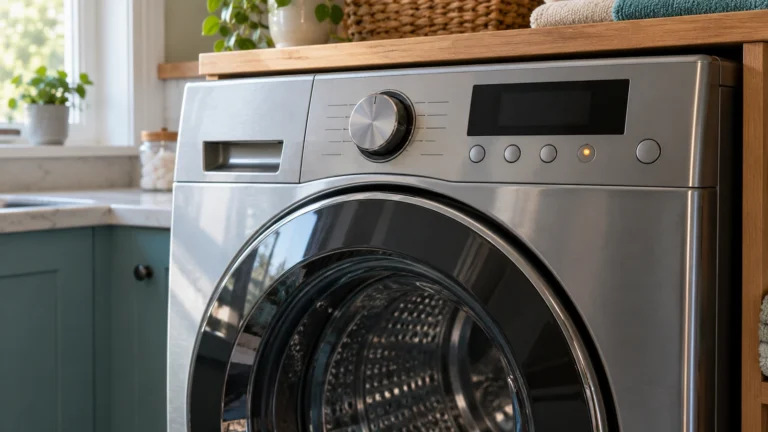
Washing Machine Leaking? Find the Source in 6 Steps
Updated September 29, 2026. An all-brands guide based on manufacturer leak checklists (Whirlpool’s are cited below); no hands-on test is claimed. For brand-specific steps, use the brand guides at the end.
Before touching anything wet: cut power at the breaker if the plug or outlet is anywhere near the water, then close the hot and cold taps behind the machine.
In this guide
Use the time and the spot to narrow it down
| Clue | Usual culprit |
|---|---|
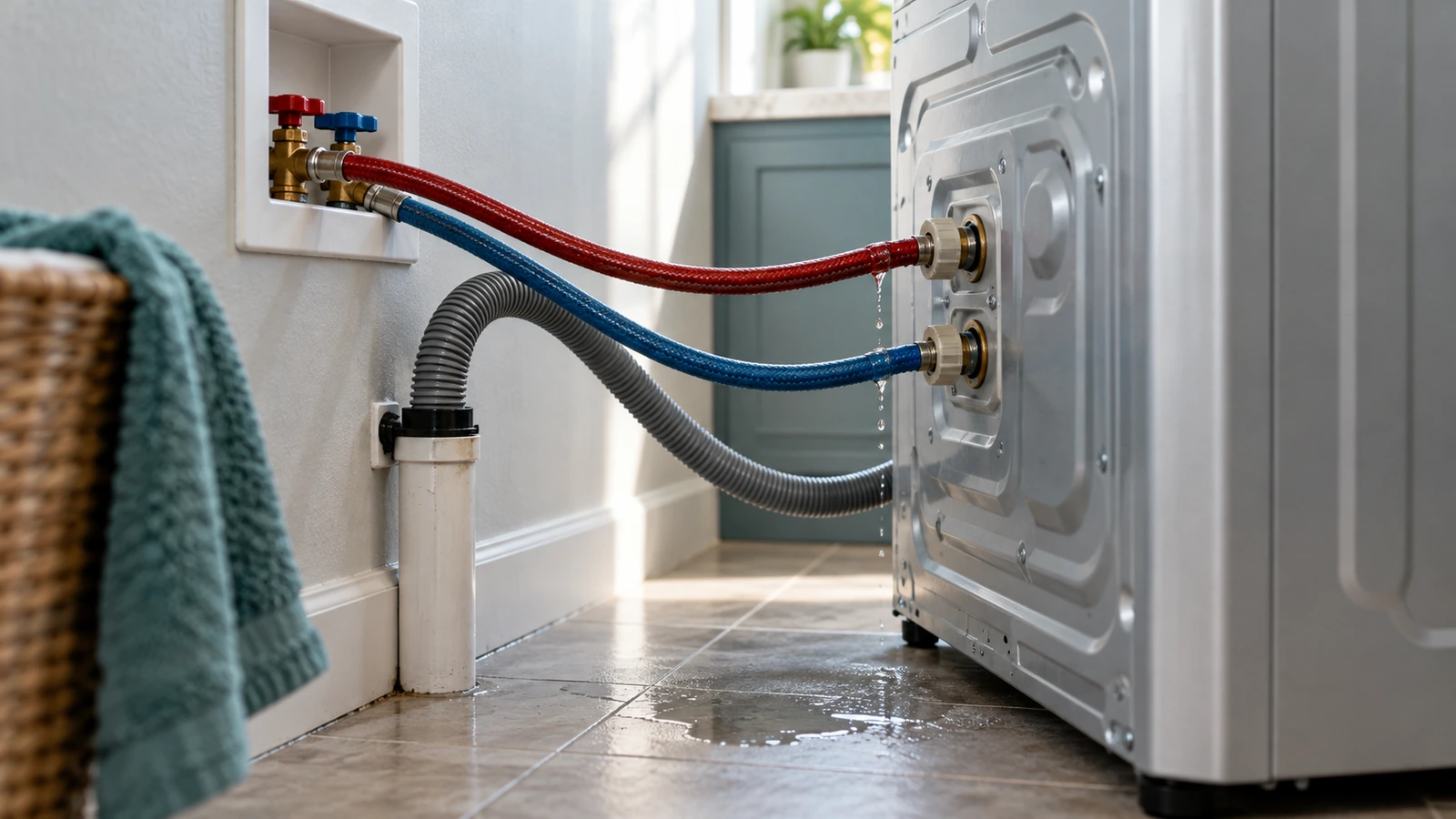
| Puddle appears with the washer idle | A fill hose or its rubber washer (the taps keep them pressurized) |
| Wet during filling only | Loose fill-hose connection, or the detergent drawer overflowing |
| Wet during draining or spinning | Drain hose out of the standpipe, or the standpipe overflowing |
| Foam around the door or drawer | Non-HE detergent, too much detergent, or thickened bleach |
| Wet at the bottom front of a front loader | Door seal, or the drain-filter cap left loose after cleaning |
| Top loader wet after adding a forgotten item | Tub overflow at a high water level |
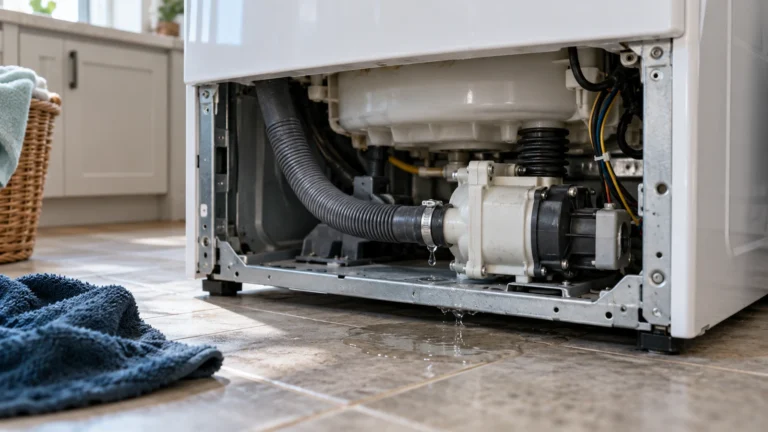
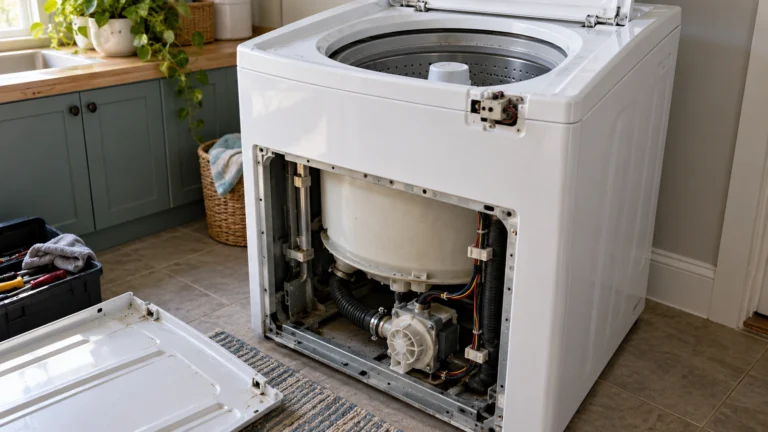
| Dripping from inside, any stage | Internal hose, pump or tub seal. Professional repair. |
1. Back of the machine: fill hoses
Each fill hose has a flat rubber washer in both ends. Whirlpool’s first leak check is that every end has one and every connection is tight. With the taps closed, unscrew each end, replace any washer that’s missing, hard or split, and screw it back on firmly by hand, plus a small turn with pliers if the fitting is metal.
Look along the hoses themselves. A bulge, crack or kink means a new hose, not a repair. Whirlpool’s washer manuals advise replacing inlet hoses after five years to reduce the risk of hose failure. A burst fill hose can flood a room quickly because it’s under constant pressure.
2. Drain side: hose and standpipe
- The drain hose hooks into a standpipe or laundry sink. Spin cycles can shake it loose. Secure it with the hose guide or clip your washer came with.
- Whirlpool’s minimum for the house drain is 17 gallons (64 L) per minute. If the standpipe or sink backs up while the washer drains, the fault is in the plumbing, and the water often runs back under the machine.
- The hose should sit loosely in the standpipe, not be sealed into it. Your installation instructions give the routing and height.
3. Foam: detergent and bleach
High-efficiency washers use little water, so the wrong soap foams over. Whirlpool attributes leaks to non-HE detergent, to more detergent than recommended, and to “no splash” or “easy-pour” bleach, whose thickener creates extra suds. Use HE detergent, dose to the cap line for the load size, and remember a single pod is already a full dose.
4. Front loaders: door seal, drawer and filter cap
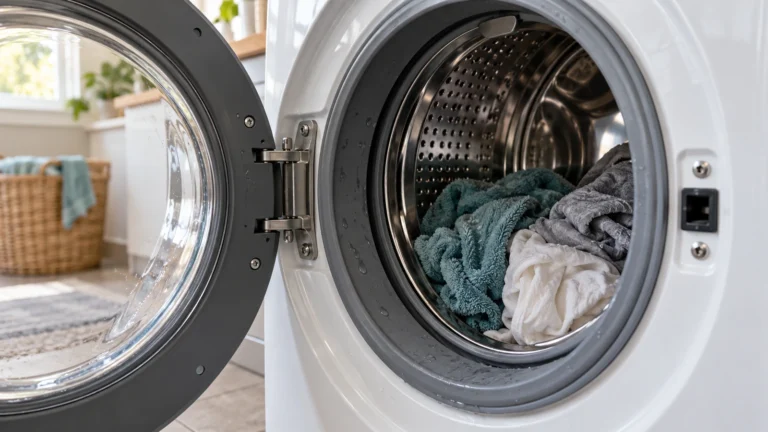
- Fold back the rubber door seal and clean out grit, hair, coins or small socks. A single sock caught in the seal can wick water out onto the floor. Look for splits.
- Clean detergent and softener build-up from the drawer and its housing so it shuts completely. On Whirlpool models with a bulk dispenser, the manufacturer’s advice is to check it’s fully closed.
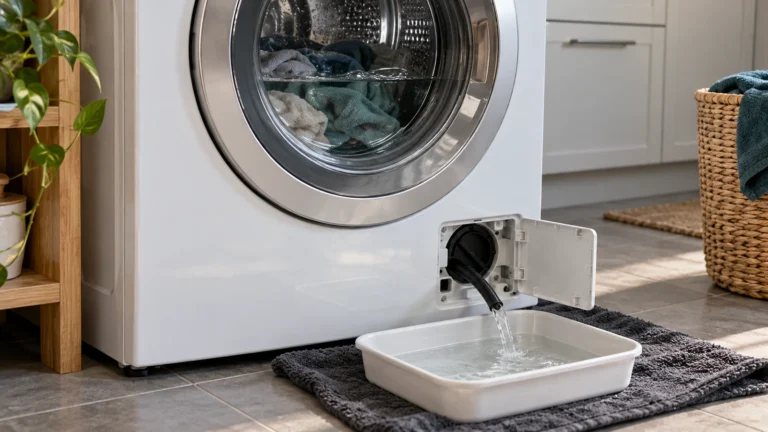
- If the small drain-filter cover at the bottom front was opened recently, re-tighten the filter cap. Open it only as your manual describes, with towels and a tray: it releases the water left inside.
5. Top loaders: overflow and balance
Whirlpool notes that adding clothes after a top-load cycle has started, at the highest water level, can push water over the inner tub. Add laundry before the fill, or choose a lower level. A washer that isn’t level can also walk and tug at its hoses during spin, so adjust the feet until it sits firmly.
6. Tracing a leak you can’t see
Dry the area completely and lay paper towels around the base and under each hose. Run an empty Rinse & Spin with no detergent while you watch. The first wet towel, and the stage when it got wet, point to the source. End the cycle as soon as you see a real leak and close the taps.
When it needs professional repair
Water from inside the cabinet, from the pump area or from the tub needs a technician. So does a leak that survives all the checks above. Give them the model and serial numbers, washer type, the leak stage and location, the detergent you use, and any code on the display. Print the checklist. Before approving a pump or tub replacement, ask what showed that part was the source.
Frequently asked questions
Why is my washer leaking from the bottom only when it spins?
Spinning drains water fastest. Check that the drain hose is still in the standpipe and that the standpipe isn’t overflowing.
Why is there water under the washer when it’s off?
A fill hose or hose washer at the back is the usual cause, because those hoses stay pressurized while the taps are open.
How often should washer hoses be replaced?
Whirlpool’s manuals advise replacing inlet hoses after five years, and sooner if you see bulges, cracks or leaks.
Brand guides: Whirlpool · Samsung · LG. Manufacturer checklists: Whirlpool front-load · Whirlpool top-load.